20 Years Post-Hurricane Katrina, Project HOPE Urges Emergency Preparedness
On the 20th anniversary of Hurricane Katrina making landfall on the U.S. Gulf Coast, Project HOPE is calling on communities and policymakers to take urgent steps to strengthen hurricane preparedness and ensure that health systems are equipped to withstand future storms. Katrina struck Louisiana on August 29, 2005, unleashing catastrophic flooding and overwhelming already fragile health systems.
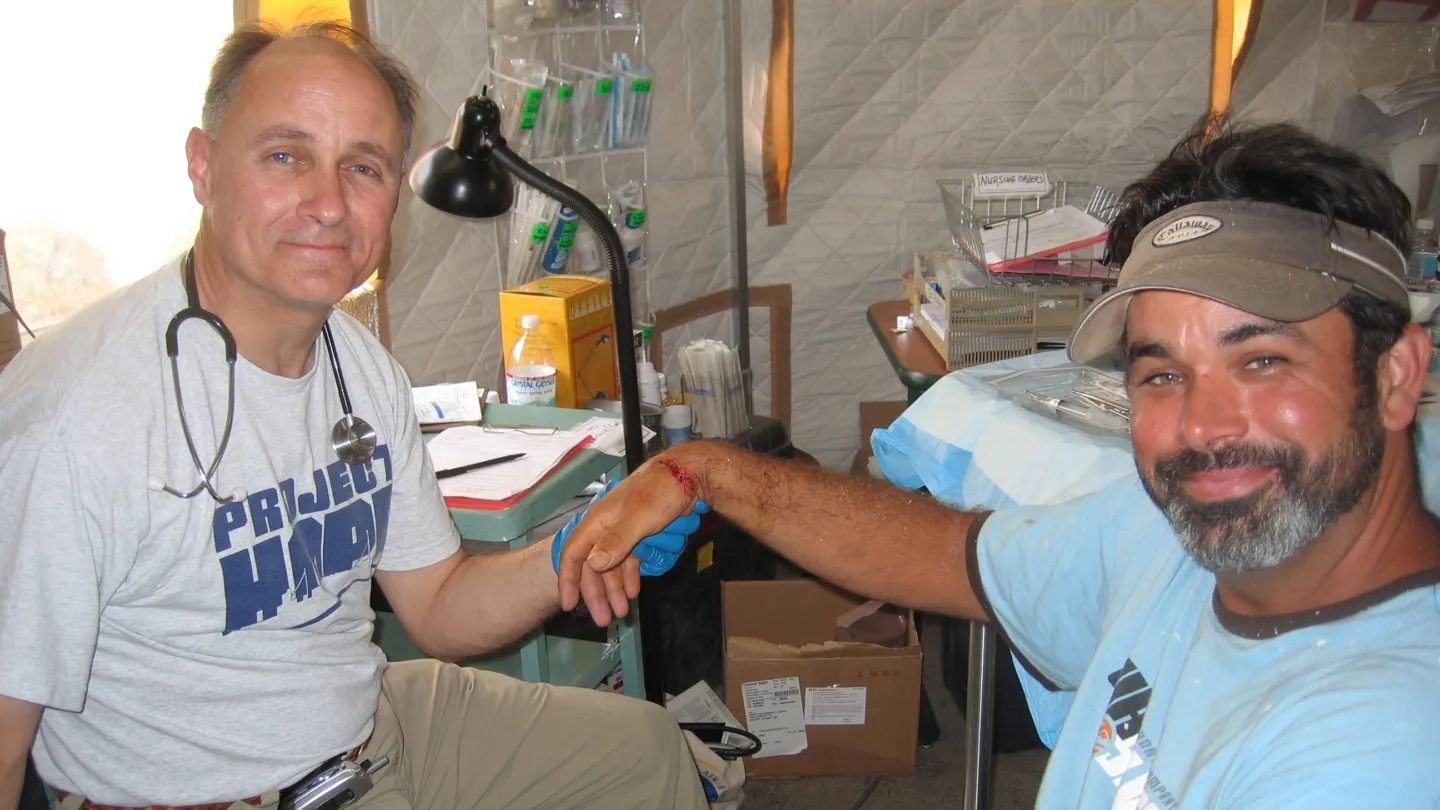
Project HOPE was among the organizations that responded to Hurricane Katrina, deploying 75 medical volunteers to the U.S. Navy hospital ship USNS Comfort to provide lifesaving care. The organization also delivered critical medicines and supplies directly to affected communities. In the months that followed, Project HOPE partnered with Coastal Family Health Centers (CFHC) in Mississippi to rebuild health infrastructure, establishing and equipping a primary care clinic in Moss Point and providing nearly $1 million in cash and in-kind support, including pharmaceuticals, medical equipment, and volunteer medical staff.
“Katrina exposed what happens when coordination breaks down and disaster response systems are pushed beyond the brink,” said Arlan Fuller, Project HOPE’s Director of Emergency Preparedness and Response. “Twenty years later, we heed the warning that extreme weather is increasing in strength, and we recognize the value that federal emergency management support can – and should – provide to local communities in their moment of greatest need. The lesson from Katrina is clear: investment in preparedness and federal coordination saves lives and now is not the time to walk back that commitment.”
In 2005, many people were stranded without access to food, shelter, or health care. Hospitals across New Orleans and the Gulf Coast were submerged, and critical health services collapsed. Project HOPE’s long-term recovery work underscored that federal and nonprofit partnerships are vital to restoring health access when local systems are overwhelmed.
As the 2025 hurricane season reaches its peak, forecasts predict above-average storm activity driven by climate change and warming ocean waters. Project HOPE warns that reduced coordination and capacity of federal disaster support can put populations at risk — particularly low-income, rural, and medically underserved communities that face the steepest barriers to recovery.
As Hurricane Katrina’s legacy reminds us, the cost of inaction is measured not just in dollars, but in human lives. Project HOPE remains committed to working with partners to ensure that when disaster strikes, communities have the resources they need to endure and recover.
Project HOPE has a long history of responding to disasters and health crises, including Hurricanes Helene, Milton, Idalia, Ian, and Fiona in recent years.
For media inquiries, email media@projecthope.org.